
Site Tour with Test Users
Choose a test user to login and take a site tour.
Choose a test user to login and take a site tour.


Posted by Larkin Landscape and Design
Filed in Arts & Culture 468 views
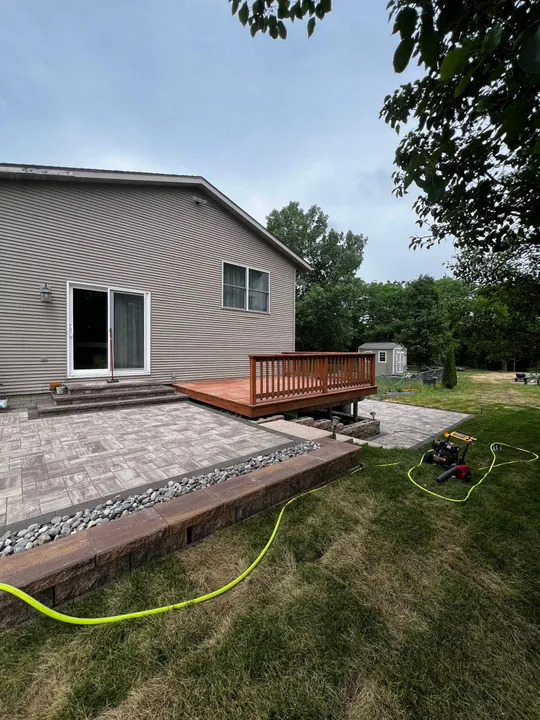
A beautifully designed patio is completely useless if the temperature makes it impossible to sit outside comfortably. Properties that face directly south or west often suffer from brutal, direct sun exposure during the late afternoon, turning the stone surfaces into a baking oven. Conversely, properties exposed to harsh northern winds can feel freezing cold even on a relatively mild autumn day. If you cannot control the micro-climate of your garden, the number of hours you can actually use the space drops dramatically. Taking control of these environmental extremes requires specific architectural additions and smart material choices to regulate the temperature actively.
Implementing effective climate control through Hardscaping And Landscaping In Ames, IA frequently starts with overhead protection. A heavy wooden pergola provides immediate, aggressive relief from the beating sun. Unlike a solid roof that traps hot air underneath, a slatted pergola allows the rising heat to escape while casting thick, cooling shadows across the dining area. To maximise this cooling effect, many designers train fast-growing, deciduous climbing vines across the top beams. During the height of summer, the thick leaves block the sun entirely. In the winter, when the leaves drop, the bare structure allows the much-needed sunlight to reach the house and naturally warm the stone below.
The colour and density of the paving materials you choose have a massive impact on the ambient heat of the garden. Dark slate or black asphalt absorbs heat rapidly throughout the day and radiates it back out long into the evening. If your garden is already intensely hot, using dark materials makes the area physically unbearable. Selecting light-coloured travertine or pale concrete pavers reflects the majority of the solar radiation, keeping the surface noticeably cooler beneath bare feet. Matching the thermal mass of the stone to the specific sun exposure of the property is a critical step in managing the overall comfort level.
Wind management is just as crucial as sun management for extending the usability of the garden into the colder months. A constant, biting breeze quickly strips warmth away from a seating area, driving guests indoors. Constructing a solid stone retaining wall or installing a tight, heavy wooden screen on the windward side of the patio creates an effective windbreak. This physical barrier forces the cold air up and over the seating zone, creating a calm, still pocket of air where a fire pit or outdoor heater can actually work efficiently without the heat being instantly blown away.
Water features play a surprisingly functional role in cooling the immediate environment. While they provide excellent visual interest and acoustic masking, the evaporation of water actively lowers the air temperature in the immediate vicinity. Positioning a bubbling fountain or a small waterfall upwind of your primary seating area allows the prevailing breeze to carry the micro-droplets of cool air directly across the patio. It acts as a natural, highly efficient air conditioning system that makes a remarkable difference on a sweltering July afternoon.
Planting large canopy trees provides the final layer of temperature regulation. A strategically placed oak or maple tree casts a massive shadow that cools not only the patio but the physical walls of the house itself, significantly reducing indoor air conditioning costs. By combining overhead structures, the correct stone colours, solid windbreaks, and cooling water elements, you manipulate the physical environment completely. You successfully flatten out the temperature extremes, creating an outdoor room that remains highly comfortable from early spring right through to late autumn.
Conclusion
Extreme heat and biting winds quickly ruin the experience of spending time in your garden. By strategically installing pergolas, selecting the correct stone colours, and building solid windbreaks, you can actively control the temperature of your patio. Managing your outdoor micro-climate guarantees that your property remains a comfortable, inviting place to relax for the majority of the year.
Call to Action
Do not let the harsh sun or cold winds dictate when you can enjoy your garden. Contact us to learn how smart structural additions can perfectly balance the temperature of your outdoor living spaces.